





Solar panels for housing associations, fuel-poverty-busting, grant-funded and tenant-first
Solar panels for housing associations are now one of the most cost-effective tools a registered provider or local-authority landlord has for cutting tenant bills, tackling fuel poverty and decarbonising a whole stock at scale. UK social landlords manage roughly 4 million social homes, and they sit at the sharp end of the country's retrofit challenge: every social-rented home in England must reach EPC band C by 1 April 2030 under new Minimum Energy Efficiency Standards, while the regulator, tenants and the reformed Decent Homes Standard all push hard on warmth and damp. We specialise in social-housing solar delivered at programme scale, archetype-led, PAS 2035 throughout, and structured so it is the resident who feels the saving, not just the balance sheet. Crucially, the funding has never been stronger: the £13.2bn Warm Homes Plan is pouring capital into social-housing decarbonisation between 2025 and 2030, so the question for most asset managers is no longer whether to fit solar but how to fund and deliver it across thousands of homes inside the 2030 window.
Why housing associations install solar across their stock
Three pressures point the same way. First, fuel poverty: many tenants are struggling with electricity bills, and rooftop solar sized for daytime self-consumption puts a saving of around £150 to £350 a year straight into a resident's pocket. Second, the EPC C by 2030 deadline: rooftop PV improves a dwelling's SAP score and is often the cheapest single measure for lifting a home from EPC D to C, especially homes that fabric measures alone leave just short of band C, and it must be planned against the £10,000-per-property MEES spend cap. Third, board and regulator commitments to net zero and social value: a measure that cuts bills, moves EPC scores and earns Smart Export Guarantee income is one the funder, the Regulator of Social Housing and the tenant can all see the point of. Solar is rarely the whole answer, but on a fabric-first, whole-house plan it is frequently the measure that tips a home over the line to band C while delivering a visible, defensible benefit to the people who live there.
How we size and roll out across stock
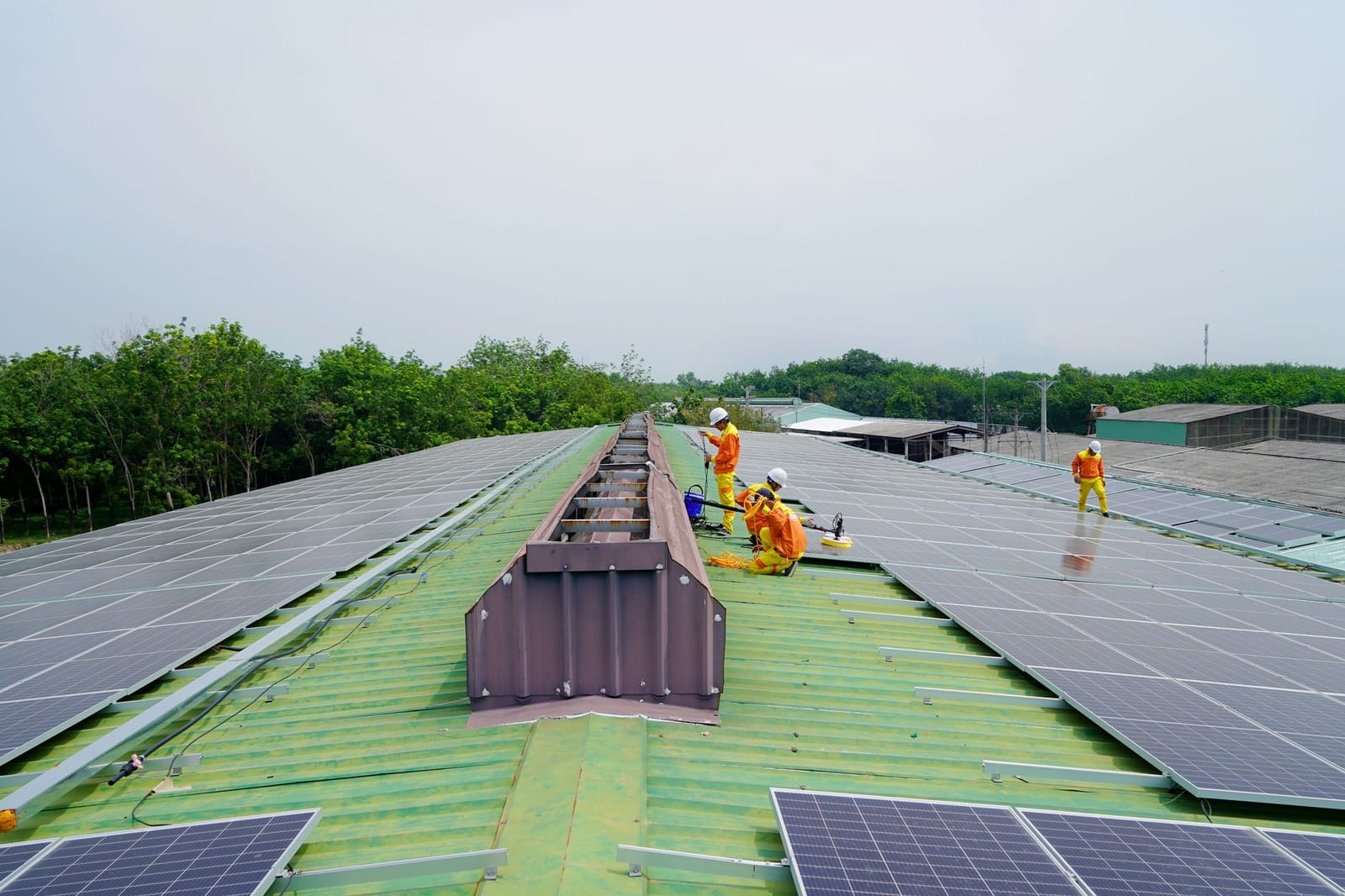
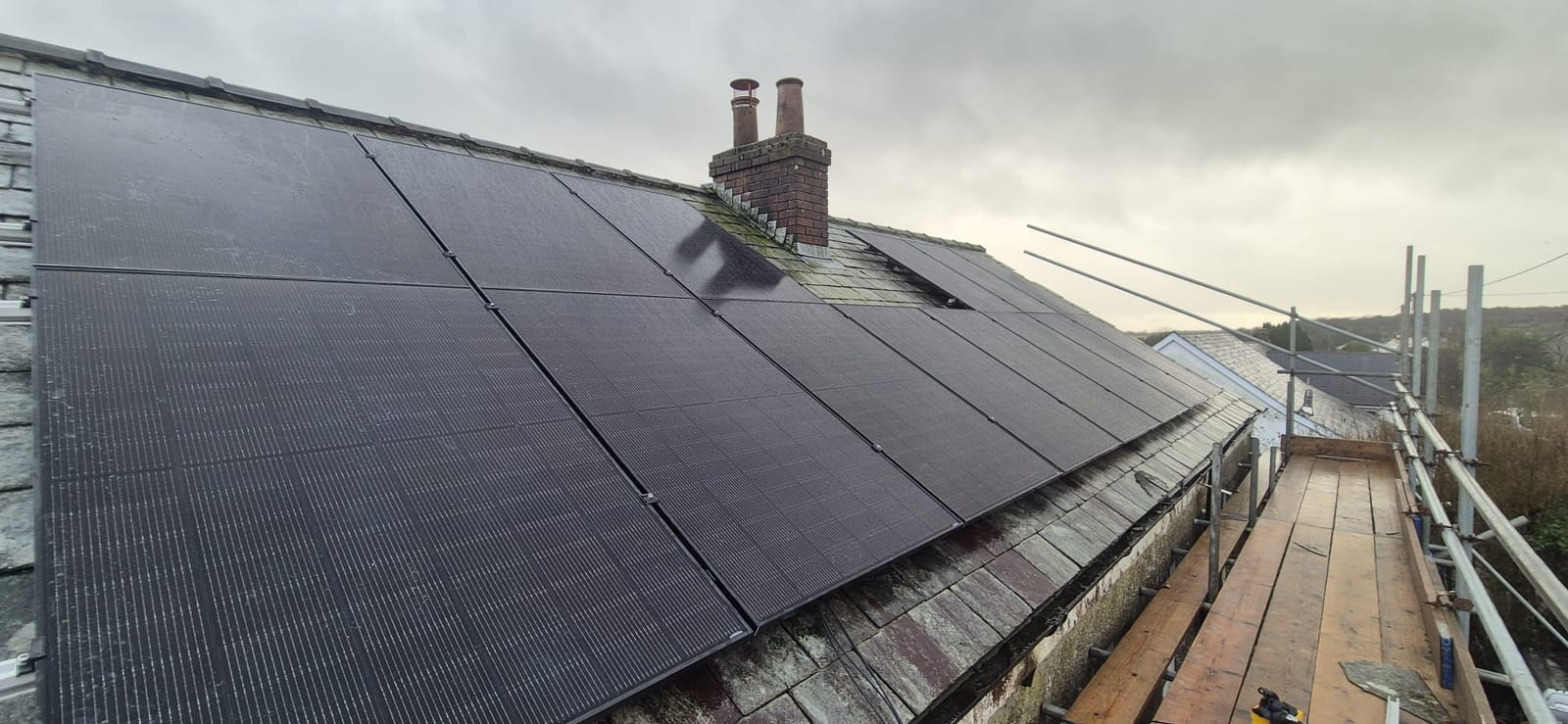
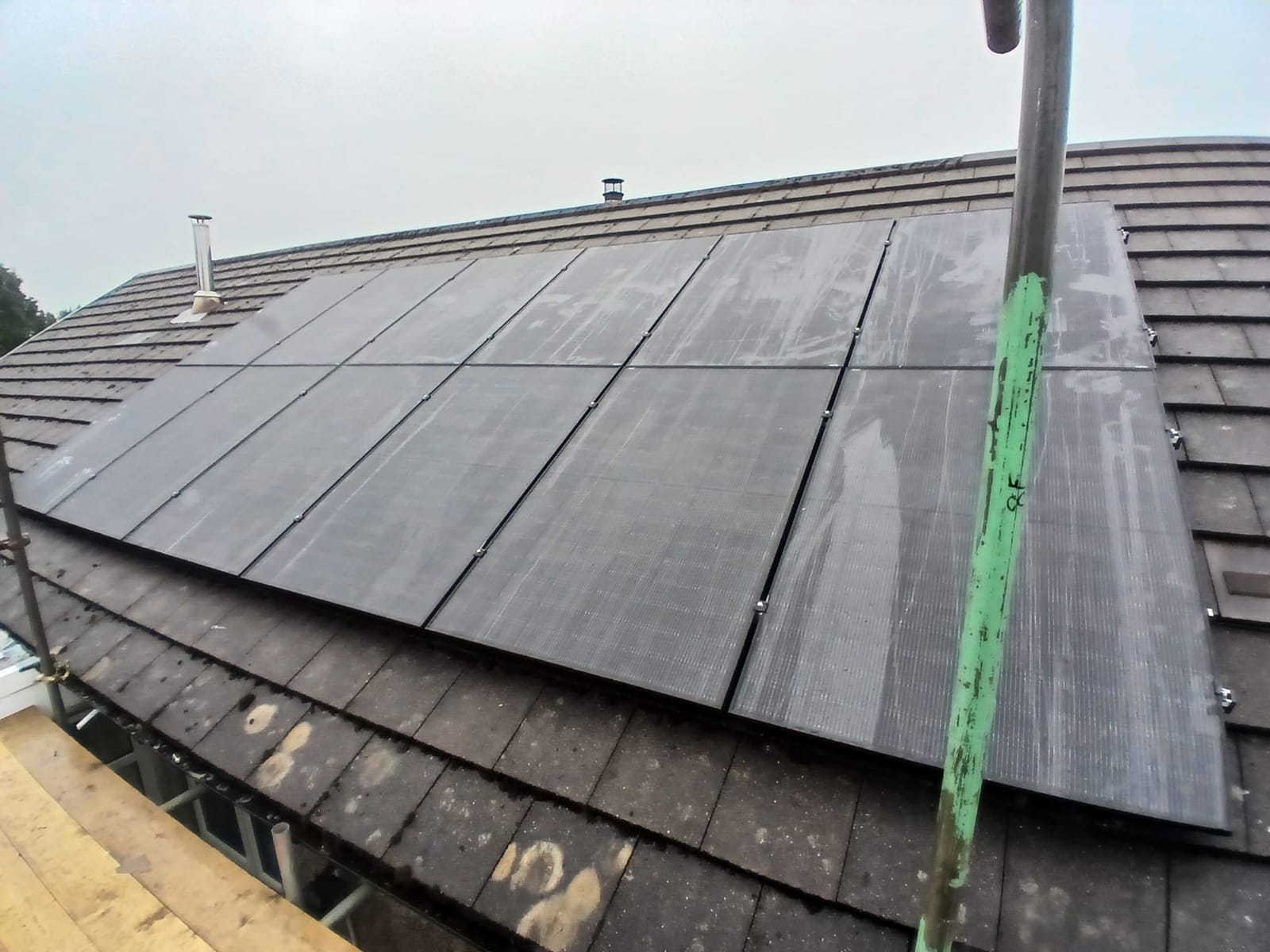
Social-housing solar is sized differently from commercial PV. For individual dwellings we design to the resident's daytime baseload, typically 1.5 to 4 kW (around 4 to 10 panels), generating roughly 1,300 to 3,600 kWh a year per home, so the household self-consumes most of the generation and feels a real bill saving rather than spilling cheap export. For communal and landlord supplies on flats, blocks and sheltered schemes we size to the landlord daytime load (lifts, lighting, pumps, laundries, warden facilities), where self-consumption can reach 80% or more: a block array runs 10 to 150 kW and a sheltered scheme 15 to 100 kW. We work archetype-by-archetype, not house-by-house: survey a representative sample of each house type, pull the SAP/EPC and smart-meter data, design one standard solution per archetype under a PAS 2035 medium-term improvement plan, then deliver street-by-street in batches with one mobilisation per area. That is how cost-per-home falls and how a 5,000-home programme becomes deliverable. The benefit model, who self-consumes and who takes the export income, is agreed before sizing, because it changes the optimum system size.
Costs, payback and funding
A typical individual social home takes a 1.5 to 4 kW system costing roughly £3,500 to £7,500 fully installed, scaling to around £350,000 to £3.75m or more across a 100 to 500-home programme, with simple payback near 9 years. Communal block arrays are priced per block at £10,000 to £135,000, and sheltered schemes at £14,000 to £90,000 with the fastest payback in the portfolio, near 7.5 years, because communal self-consumption is so high. But this sector is grant-led, so the number that matters is the match-funding contribution after grant, not the headline cost. The flagship route is the Warm Homes: Social Housing Fund (Wave 3), with £1.29bn-plus confirmed for 2025 to 2028 (plus a later £100m uplift), delivered as match funding through a Challenge Fund route (minimum around 100 eligible EPC D-G properties) and Strategic Partnerships for delivery at scale, with grant defrayed by 31 March 2028 and PAS 2035 compliance mandatory. On the lowest-rated homes, ECO4 and ECO4 Flex (extended to 31 December 2026) can top up funding via the energy-supplier obligation, and the Affordable Homes Programme funds designed-in solar on new build. Surplus is exported under the Smart Export Guarantee, with tariffs typically 4 to 15p/kWh as of 2026, which can subsidise the wider programme. We produce bid-ready, PAS 2035-compliant packages with the archetype modelling and defrayal sequencing funders want to see. Our cost guide works through the numbers by archetype against the spend cap.
Compliance and resident considerations
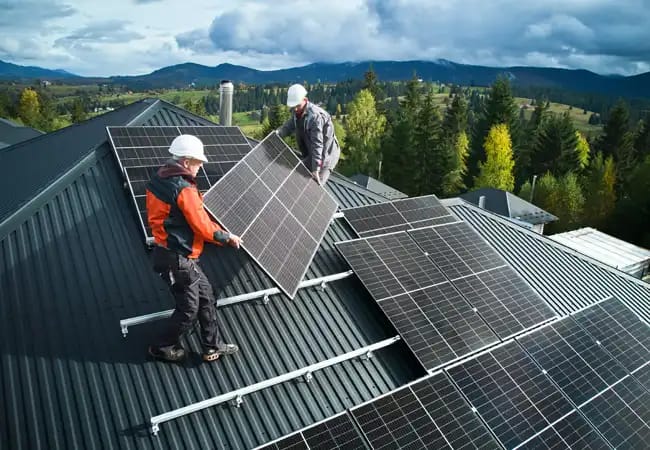
Every grant-funded retrofit must run inside the PAS 2035:2023 whole-house process, which came into full effect on 30 March 2025: a retrofit assessment, a retrofit coordinator owning the medium-term improvement plan, and a fabric-first, moisture-aware approach. Each install must be MCS-certified and TrustMark-registered, with electrical work to BS 7671. Grid connection is usually a G98 connect-and-notify under 3.68 kW per phase on individual dwellings, while communal and block arrays above that need a G99 application early, as DNO timescales can run 6 to 18 months on constrained networks. Rooftop PV is generally permitted development under Class A Part 14 of the GPDO, but conservation areas, listed stock and higher-risk buildings of 18m or seven storeys plus (which engage the Building Safety Act 2022 and SPF1981 fire design) need closer engagement. Resident considerations sit at the centre: a dwelling-level install is typically one to two days with only a short final-connection outage, but getting consent and access across thousands of tenanted homes is the single biggest delivery risk, so we plan communication, consent and access carefully, with extra care for vulnerable residents in sheltered and supported schemes. Awaab's Law damp-and-mould duties make a fabric-first, moisture-aware approach essential, and our PAS 2035 process is built around it.
How we approach a multi-property programme
We treat a stock-wide roll-out as a single archetype-led programme, not a stack of individual jobs. We survey representative samples per house type, model the SAP/EPC uplift per archetype up front so you can see exactly which homes solar tips over the line to band C, then prioritise the cheapest EPC-C tips first to make the most of the £10,000-per-property cap. We design the benefit model so residents self-consume the saving and the landlord (or a split-benefit tariff partner) takes only the surplus export, and we communicate that to tenants before a panel goes up. Delivery runs street-by-street in batches with shared scaffolding and one mobilisation per area, sequenced to spend grant on time. Procurement stays clean: we call off through compliant social-housing decarbonisation frameworks such as Fusion21 and Procurement for Housing, giving a compliant route under the Procurement Act 2023 without a standalone tender. The result is a bid-ready, defrayable programme that moves the whole stock toward 2030 while the tenant feels the bill saving at every step.
An illustrative example
As an explicitly illustrative composite based on typical UK social-housing programmes: a housing association of around 14,000 homes in the West Midlands, with a large tranche of 1950s to 1980s terraced and semi-detached stock at EPC D and high tenant fuel poverty, won a Wave 3 Warm Homes: Social Housing Fund bid and rolled out solar across roughly 1,200 homes at about 3 kW average, around 3.6 MW aggregate, delivered street-by-street. Aggregate generation was in the region of 3.4 million kWh a year, tenants self-consumed and saved an estimated £240 to £300 each per year, and solar was the final measure that tipped roughly 70% of the targeted band D homes over to C on a fabric-first plan, with surplus exported under SEG to subsidise the programme. The work was match-funded and delivered through a compliant decarbonisation framework. The figures are illustrative and depend on your stock, archetypes, tariff and the benefit model you choose.
Whatever your stock mix, we can help. See our pages on solar for general needs social housing and sheltered and supported housing solar, read the cost guide, check the funding routes, browse the social-housing solar FAQs, or request a free feasibility for your portfolio.